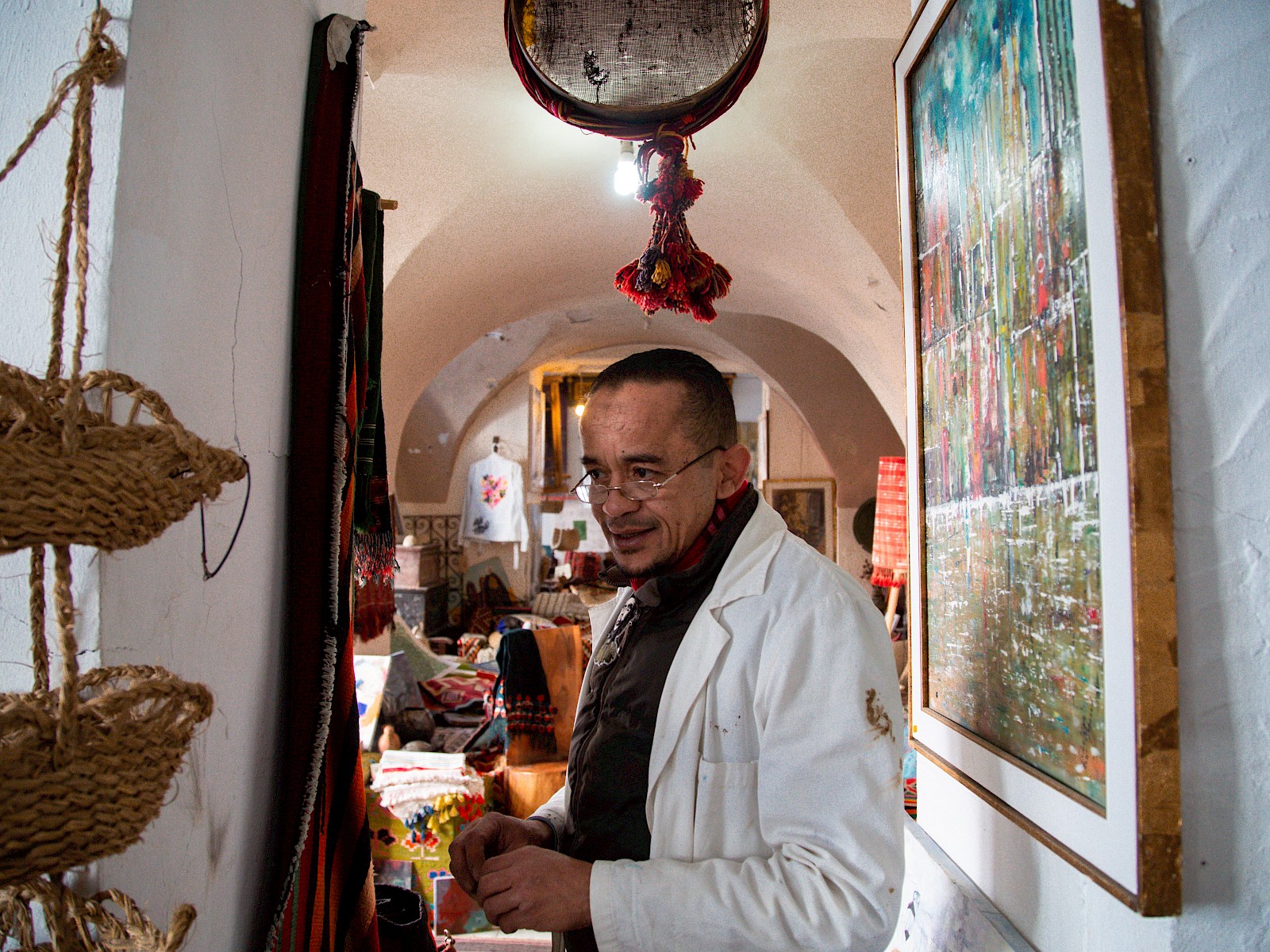
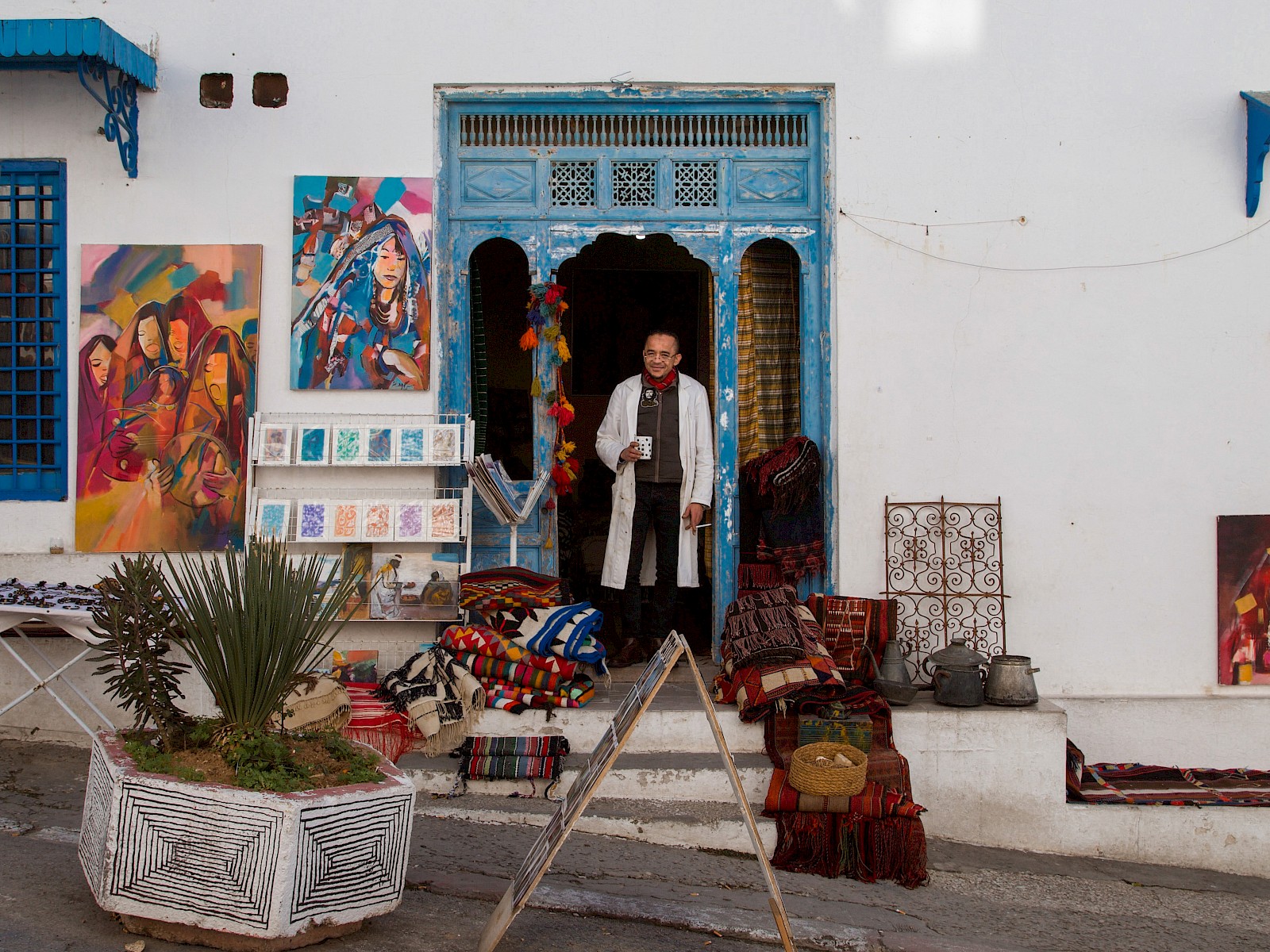
Kamal Khechana has painted the same town for twenty years, and he was not born in it.
Photographs · Ayoub Ahmed·2026·A photo essay
Sidi Bou Said is the most photographed town in Tunisia. For a long time, that was my reason not to go photograph there.
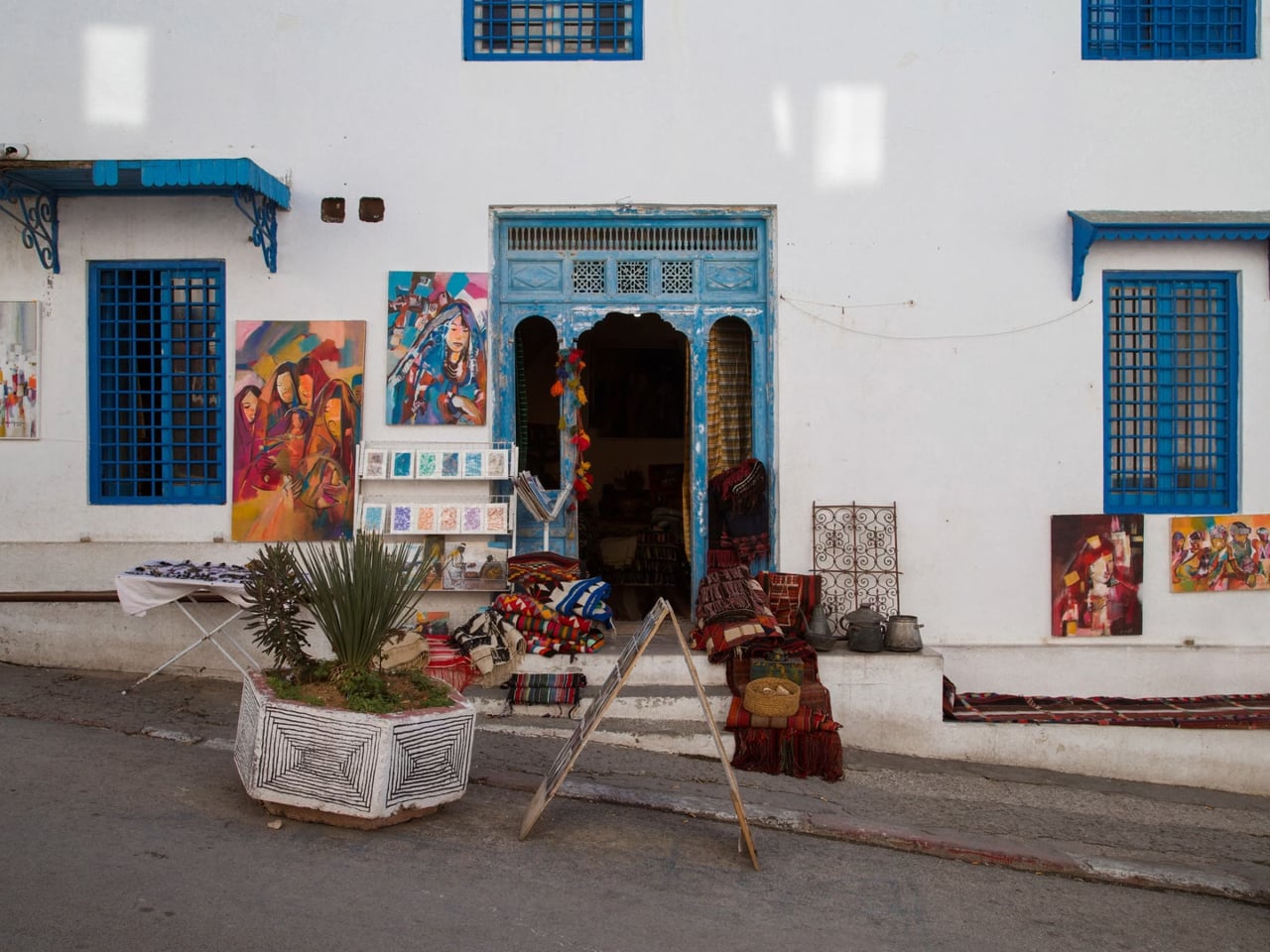
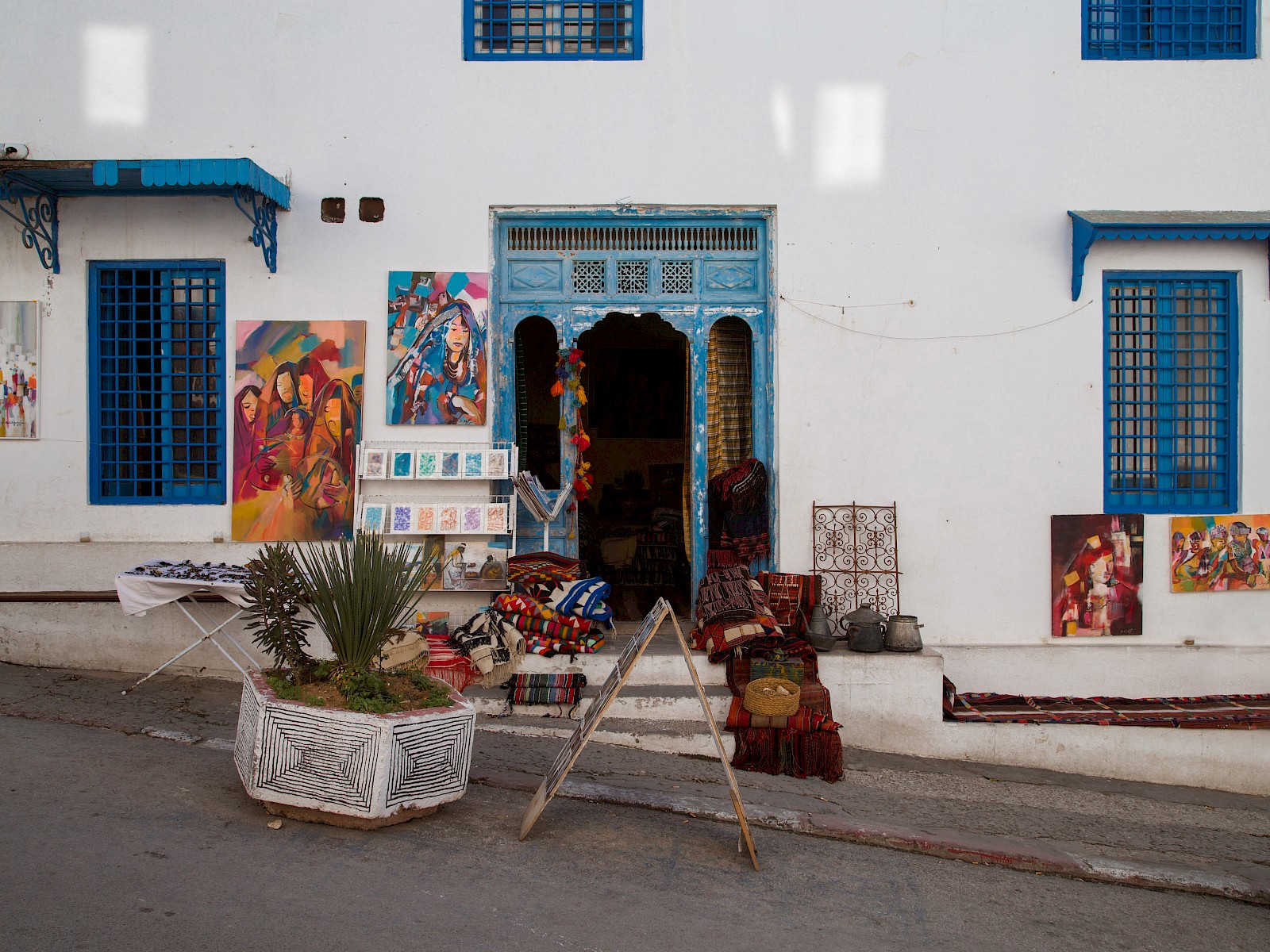
I knew the pictures before I arrived. Blue doors, white walls, and a cat arranged on a step as though it had been told to wait there. The town settled on its two colors a hundred years ago and has kept to them since. While I can't deny the lovely scenery of the town, I am wary of places like that, where they have already decided what you are allowed to see.
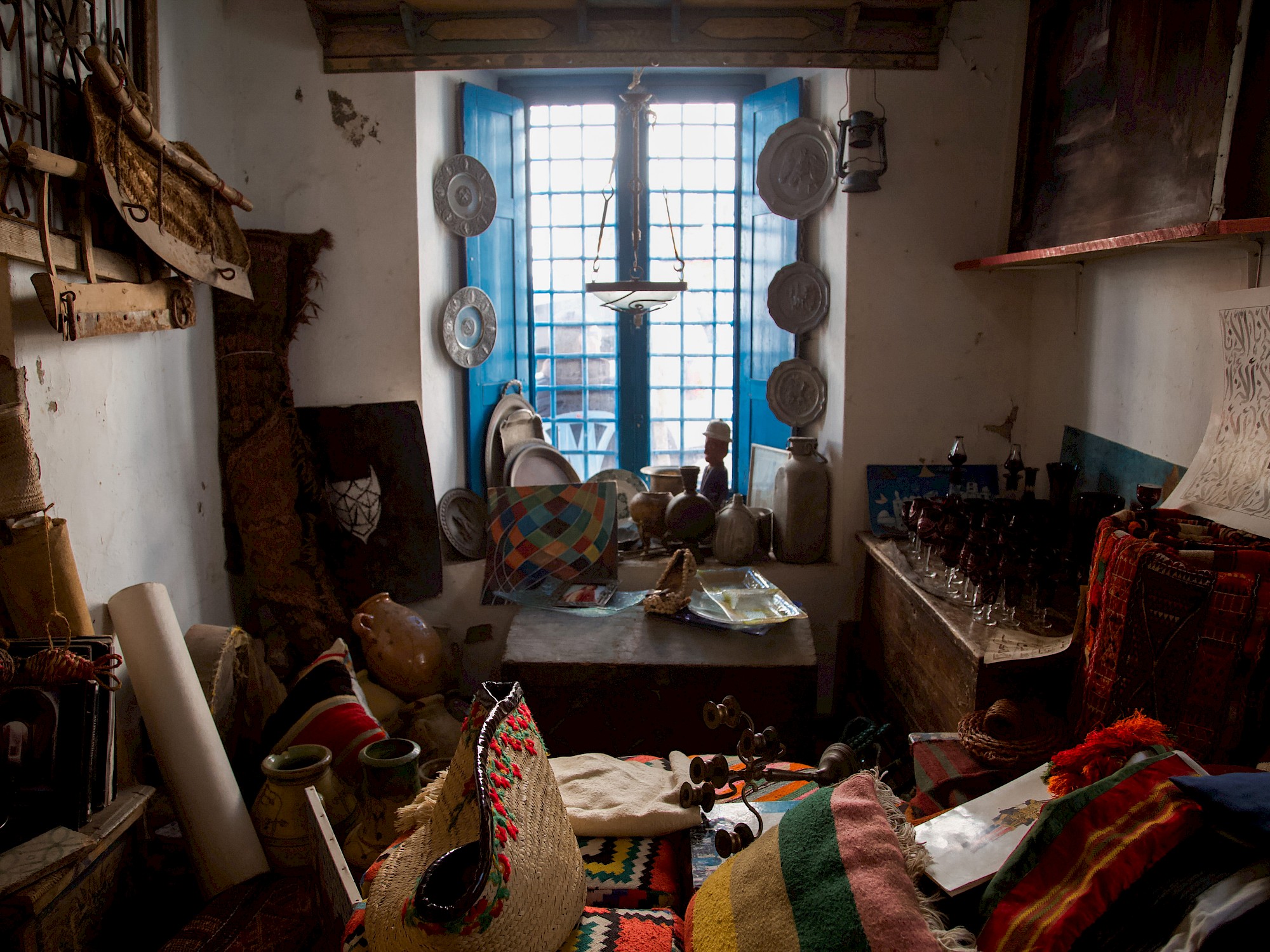
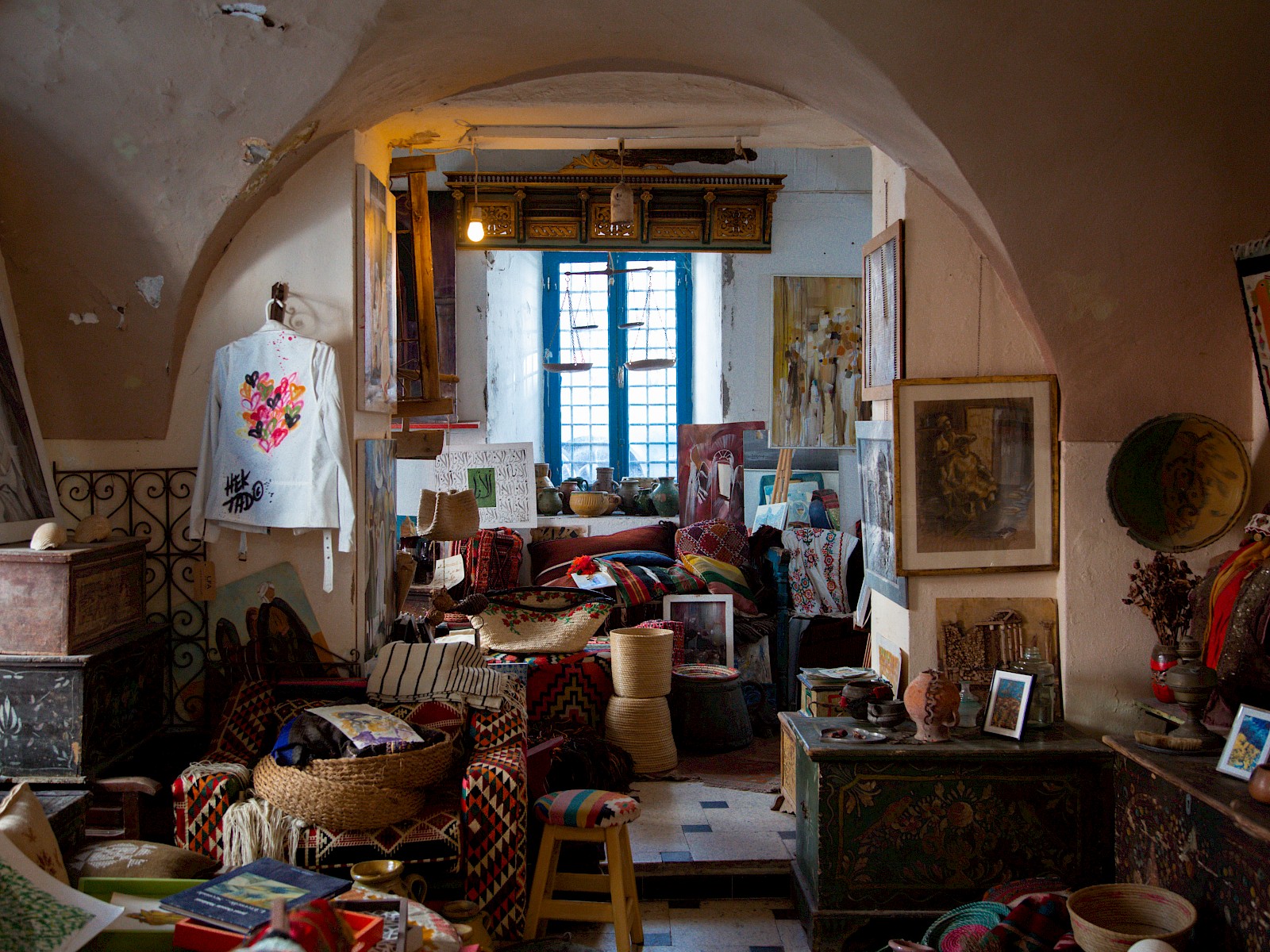
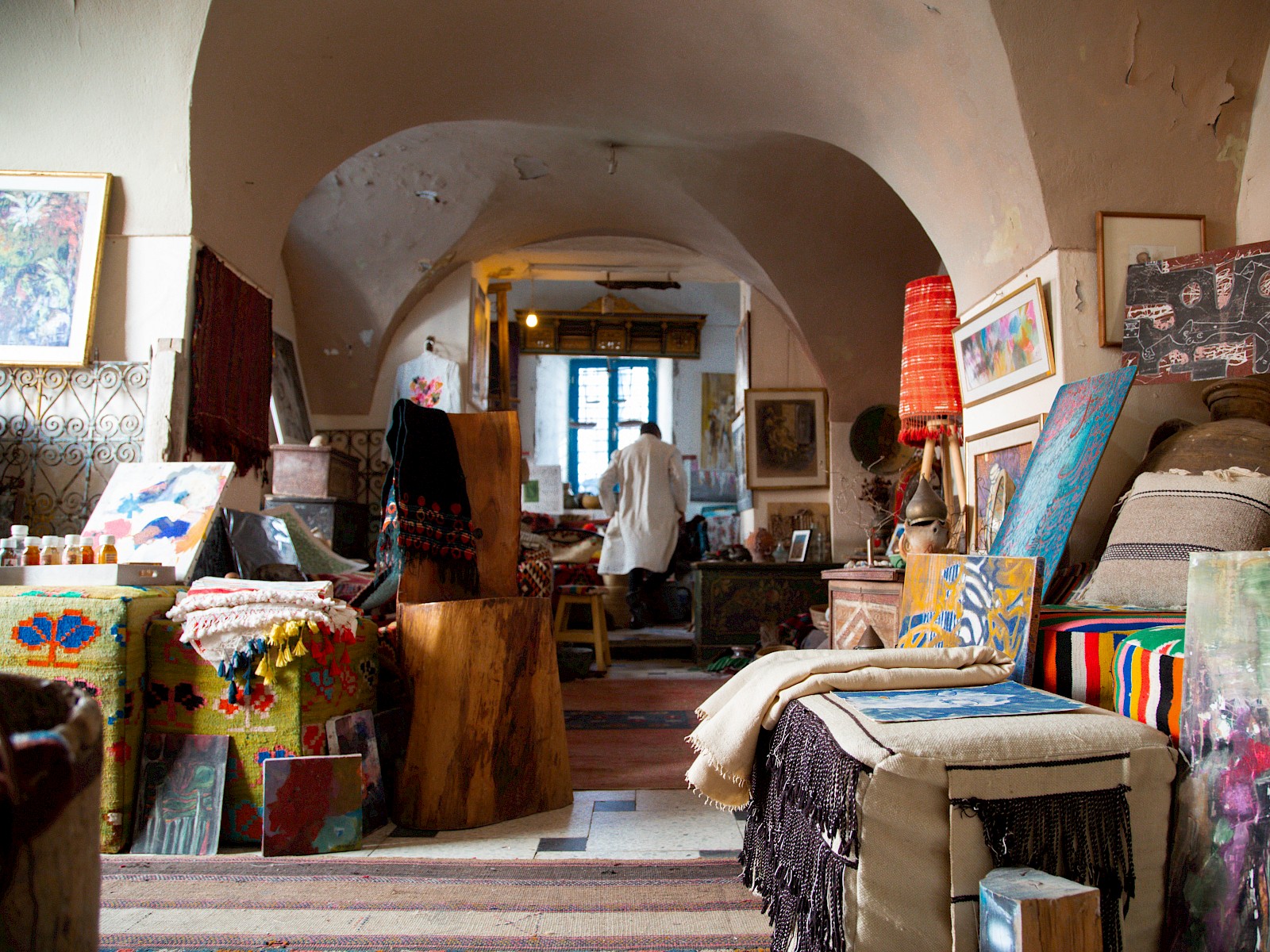
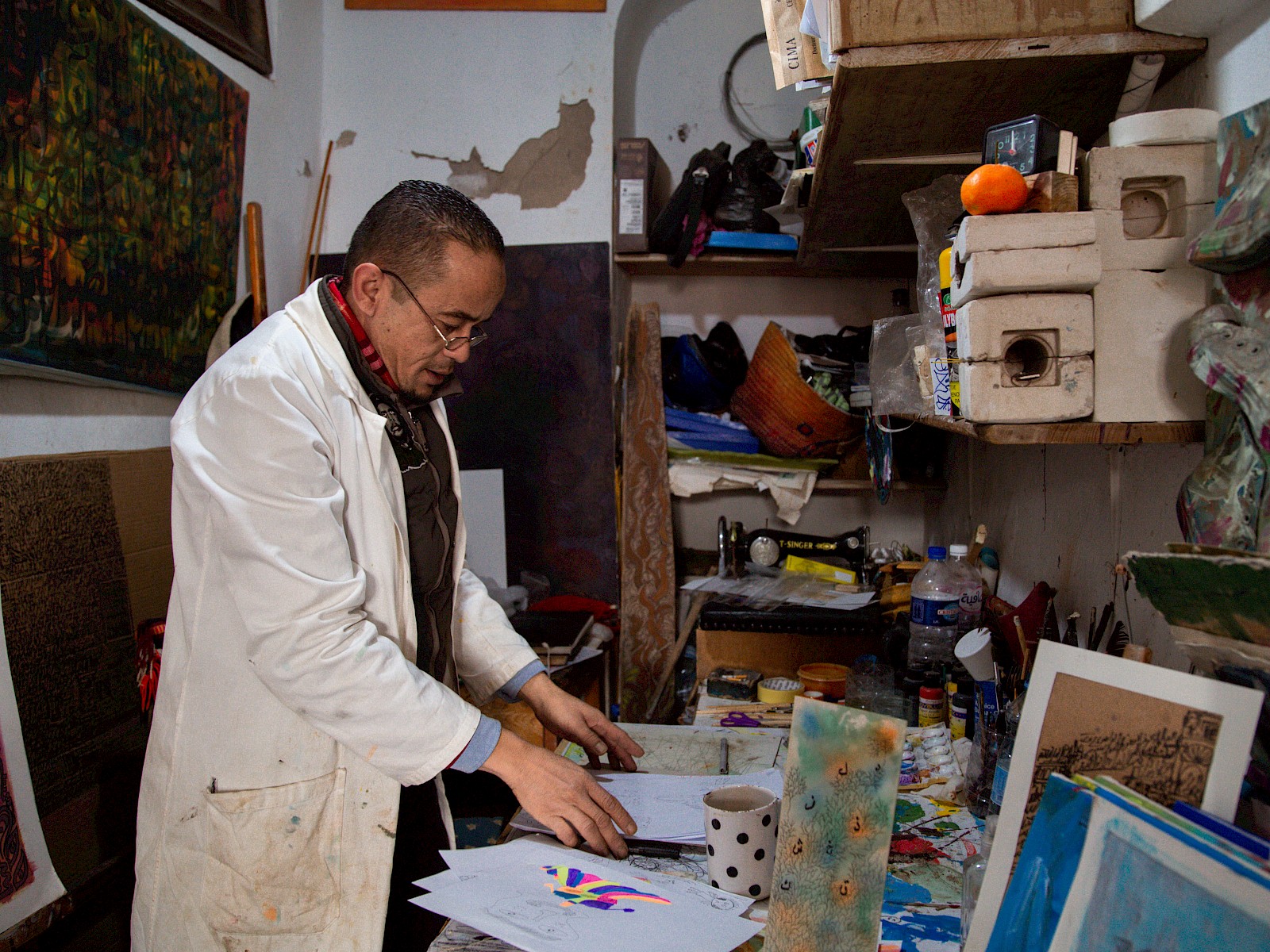
I went up the hill anyway, the way you go to a thing you distrust, half-hoping to catch it out. The doors were exactly as blue as the postcards. When I was on my way back, there was a shop and a man in a white coat standing in the middle of it, looking down at something I could not see. I stayed for him, and the first thing he told me was that he had arrived here the same way I had, as a tourist. He just never went home.
Kamal Khechana was born in 1966 and has been a working artist since 1980, which is the year, as he puts it, that he left his father's keeping and went out into the world. Before the painting, there were other fields he tried and left: theater, music, photography, and a spell as a tailor. He does not offer this as wandering, rather as looking for himself and finding where he will eventually stand.
He works in the white coat of a chemist, and he does not mind being called a craftsman. No one, he said, gets to set the bar that decides whether someone is an artist. We are all born with something that makes.
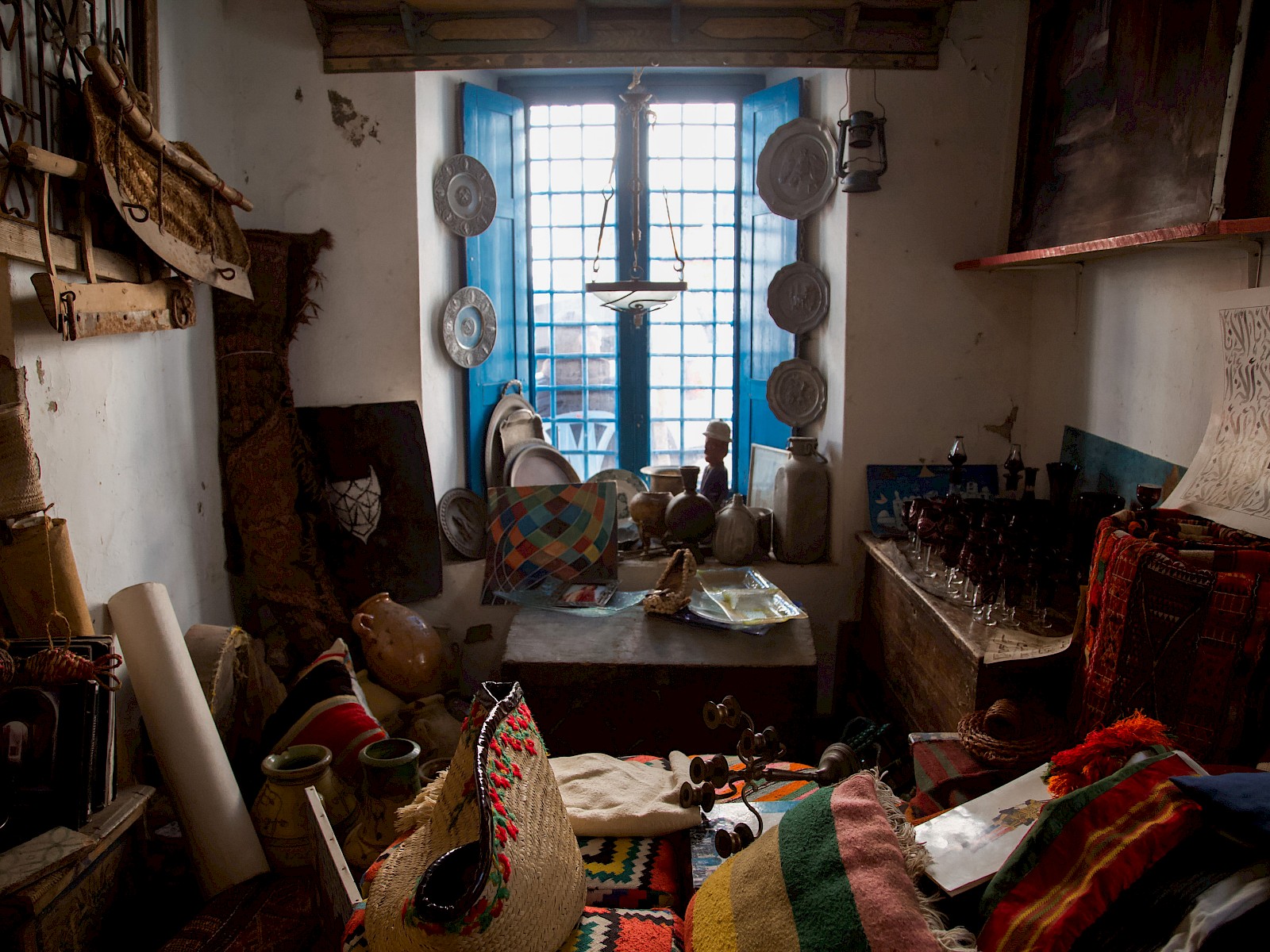
The shop, he told me, is the nest of safety. The phrase is his. He cannot let a day pass without creating something. On the days when only the ordinary work happens, a visitor at the door, a question about a price, he ends them in a kind of mourning. A day went by, he said, and nothing came into the world.
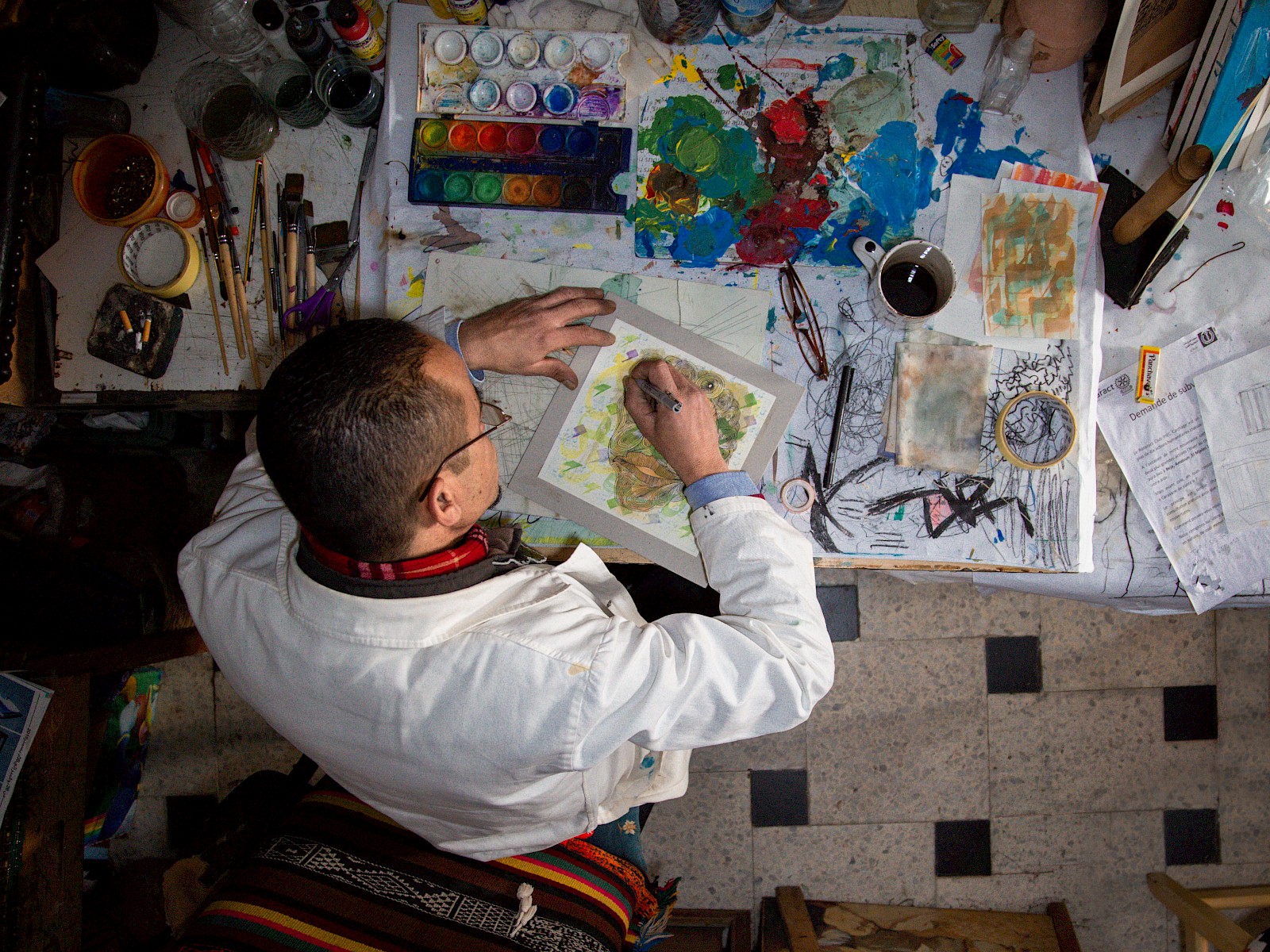
He believes, and means it exactly, that a man adding marks to a sheet of paper in a small Tunisian town is working on behalf of all of humanity. Not for Muslims. Not for Tunisians. For the whole of it, which moves forward by the width of one line.
Up close, the large claim shrinks to its real size. It is one mark and then the next. From across the room the patterns look dense and certain. Near to, they are only a hand, deciding again and again where the pen should go.
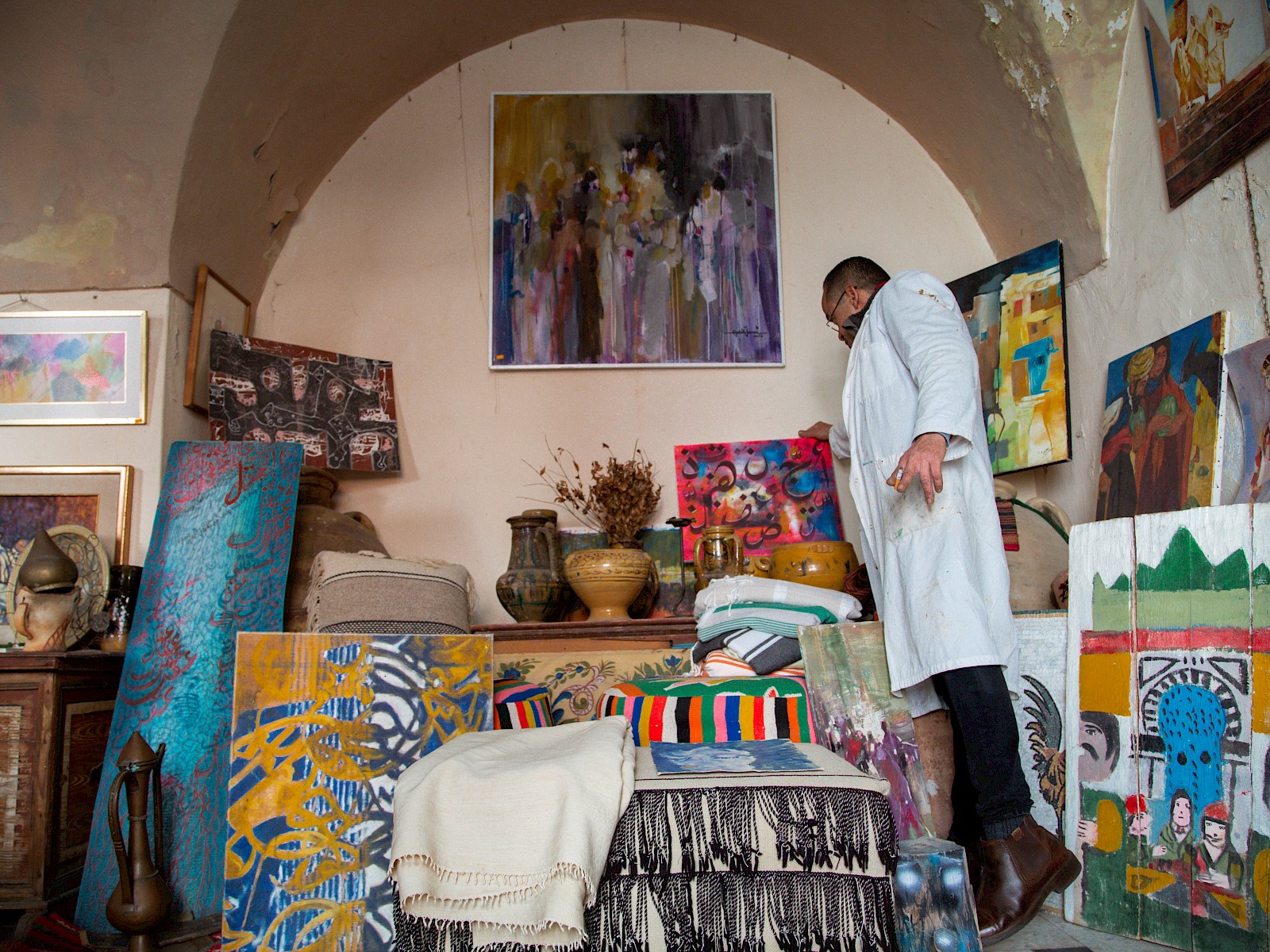
He finishes a piece. He leans it against the others. Then he starts looking for the next one.
02The Painting He Won't Sell
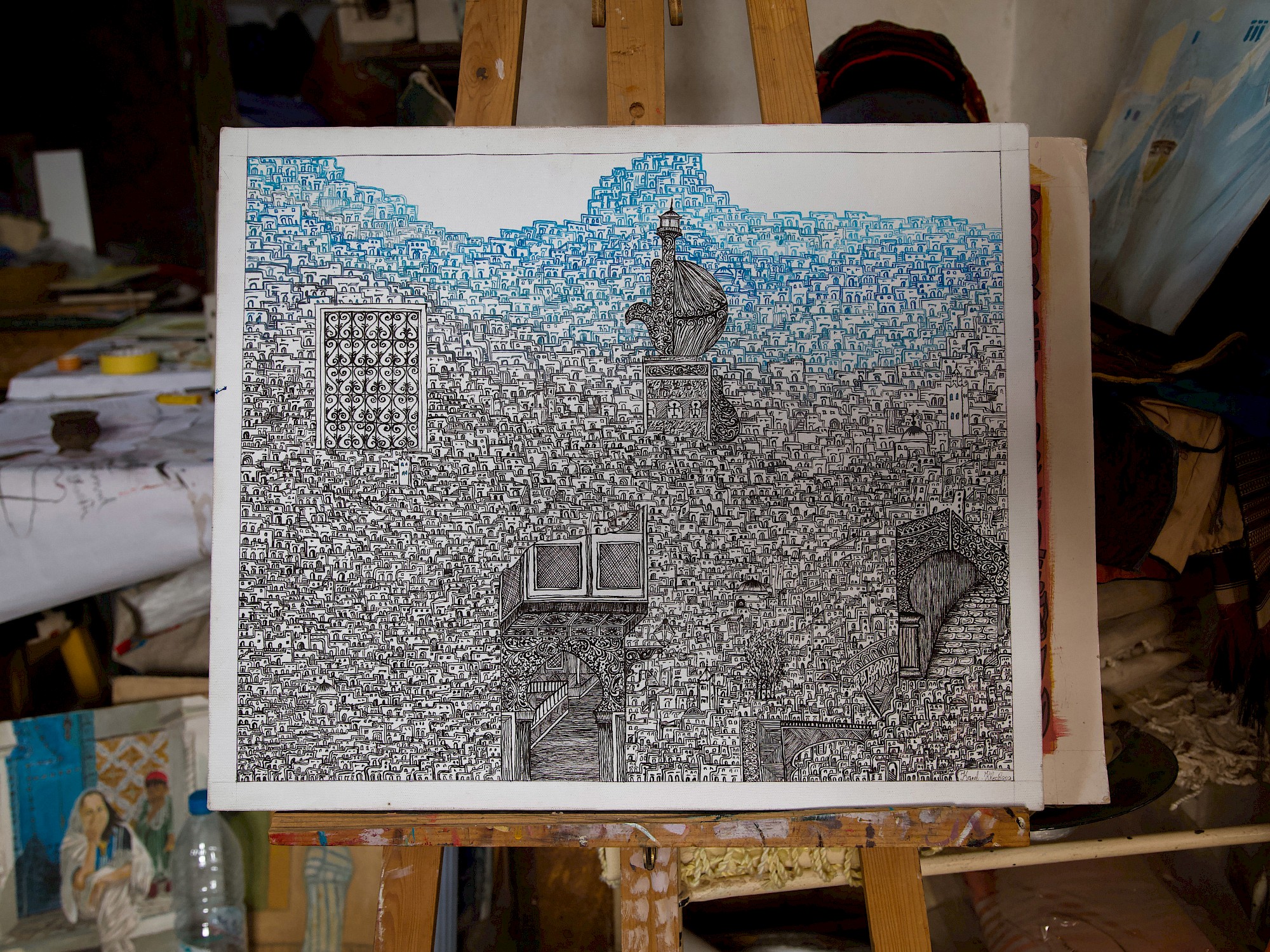
There is one painting in the shop that is not for sale, and he brought it out the way you bring out the thing you have been waiting to be asked about.
It is the town, drawn in black and white. It reads less like a map and more like one dense, growing thing. Up through the middle of it, the houses turn blue. They keep going past where the real town stops, into the sky.
He explained the blue without my asking. For a long time, he said, the painting stayed empty; he had drawn the town as it is, the houses climbing until the hill runs out, and it would not hold the weight of what he meant by Sidi Bou Said. So he kept building. He carried the houses up off the ground and into the air, in blue, because the people who lived here and were happy here did not leave when they died. Their souls stayed, hung over the town, and they are the reason a man feels safe in it; The dead keep the place.
Kamal mentioned to me that he is not from the town. He came twenty years ago, as a visitor. He climbed the hill once and never really left. He could not, he said, be more at peace anywhere on earth. He calls the painting hommage, using the French word, a gift back to a town that took him in. He is not its son. It adopted him.
Eight hundred years ago, a Sufi named Abou Said climbed this same hill. At the time, it was still called the mountain of the lighthouse. He came to be alone and near God. People gathered around him slowly until there was a town, and it took his name.
By one account, he had been a tailor first. He put the trade down to go and learn. It is the same trade Kamal tried and left.
Two men, eight centuries apart. Both up the same hill. Both by way of the same abandoned craft.
There is a thing they say about Sidi Bou Said. Kamal says he has watched it come true. A person who arrives honest settles and stays. His children stay too. A person who arrives with something crooked in him does not last the year. The ground will not hold him. His feet slip, and he is gone. The town keeps the ones it can keep.
He is keeping the Sidi Bou Said painting. One day, he hopes, there will be a room of his work, and this will be the piece in the middle of it.
03The Ones It Keeps
Kamal walked into this town twenty years ago as a stranger. What he was looking for was under his feet from the first step. I walked past my own story for ninety minutes. It was waiting at the door I started from. The town keeps the ones willing to stay long enough to be kept. I was nearly not one of them.
The town the postcards photograph is the town on the ground. In his painting, that is the part that has to stop. The other town is built upward, in blue. You cannot photograph it, because it is made of people who are no longer there. I came looking for the first town. It took me a while to understand that the second one is the part that matters.
I make films about people who had to leave. About displacement and return. About what a place keeps doing to you, after you are gone from it. Kamal is that photograph, turned the other way. Nobody drove him here. He arrived, and the town decided to keep him. Twenty years on, he is painting it a thank-you note the size of a window, and refusing to sell it. I have spent years on one question, how do you belong to a place you were forced out of? He is the quieter, stranger version of it. How do you come to belong to a place that was never yours? And how does it let you know it has agreed?
I do not have his answer. I think his answer is the blue houses, going up past the roofline, into the part of the sky where he is certain that no one who loved this town has actually left.
Film · 1:43 · Kamal Khechana · Arabic with English subtitles